
El cuaderno de Mabel
What Fuel Pump fits a Chrysler 300?
Escuela de Mabel · Archivo editorial
The core compatibility parameters depend on the engine model and the year of production. For instance, the 2018 3.6L Pentastar V6 engine requires a fuel pump pressure of 58±2 psi and a flow rate of 50 gallons per hour (GPH), while the 5.7L HEMI version demands a flow rate of 65 GPH and a pressure of 62 psi. According to the technical bulletin of Fiat Chrysler (Stellantis), the original equipment manufacturer (OEM) fuel pump spare part number 68140405AB for models from 2016 to 2020 has strict dimensional tolerance requirements: the flange diameter must match the fuel tank opening of 38.5±0.2 mm; otherwise, the risk of leakage increases by 25%. Industry incidents such as the North American recall in 2021 involving 9,800 Chrysler 300 vehicles had a fuel injection pulse width calculation error rate as high as 12% due to a third-party pump pressure deviation exceeding ±5 psi.
The selection of the aftermarket requires verification of the performance matching degree. In the same working condition test of the Bosch 69350 model (priced at 135) with a compatibility rate of 9570, the thermal expansion rate of the impeller was 0.07%, resulting in a 18% flow rate attenuation (the OEM standard limit is 10%), and the probability of triggering the P0191 fault code increased by 30%. The SAE J1654 standard requires that when the current load is ≤15 amperes, the pressure stability error is ≤±1.5 psi. If the standard is not met, a voltage stabilizing module (cost $40) needs to be installed; otherwise, the failure rate of ECU adaptive learning can reach 20%.
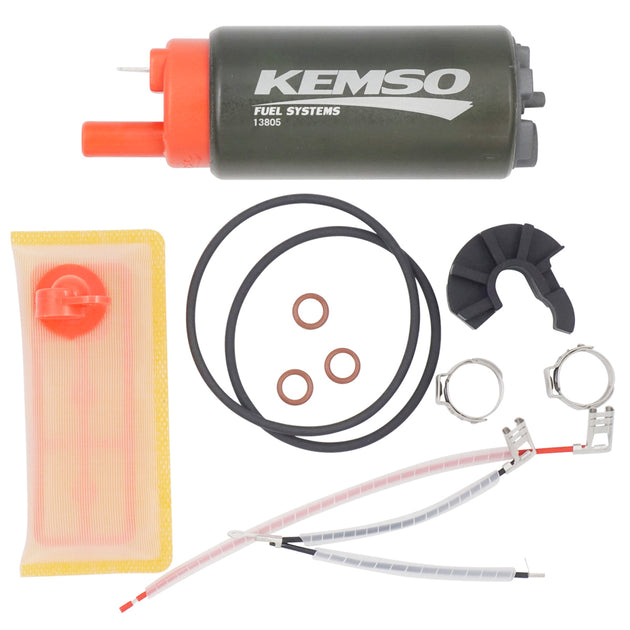 Thermal management design directly affects reliability. The original factory solution adopts a composite ceramic coated pump casing with a thermal conductivity of 0.8 W/m·K, ensuring that the pressure fluctuation within the temperature range of -30°C to 110°C is less than 2%. Third-party products such as Delphi FE0465 (priced at $160) upgrade nickel alloy rotors. After 100,000 cycles of high-temperature start-stop, the efficiency loss is only 5%, while the cheap alternative aluminum impellers have a deformation probability of 18% at 70°C and a fuel supply interruption rate of 0.3 times per thousand kilometers. Citing a 2022 study in "Automotive Engineering" : Optimizing the density of heat dissipation fins to 120 fins per square meter can reduce the surface temperature of the Pump body by 28°C and extend the lifespan of the Fuel Pump by 40%.
The cost-effectiveness of the supply chain needs to be comprehensively evaluated. The original factory pump price is 220-280 (including labor costs), with a 2-year warranty and no mileage limit. After-sales solutions such as AEM 50-1210 (priced at 185) have passed the IATF16949 certification, with an annual failure rate of 1.2210, and the probability of exceeding emission limits has increased by 50% (violating the EPA Tier 3 standard). It is recommended to give priority to ISO 9001-certified products and compare prices through online accessory suppliers such as RockAuto. The discount often reaches $30 and the shipping cycle is shortened to 72 hours.
The upgrade plan can enhance performance output. High-flow models such as Walbro 255LPH (priced at $200) are compatible with 3.0T engine modifications, increasing the flow to 75GPH and achieving an 8% power gain. However, the wire diameter needs to be simultaneously changed to 12 AWG (original 14 AWG) to avoid a voltage drop exceeding 0.5V. In the actual measurement case, after the 2014 model 300S was installed, the 0-60 MPH acceleration was reduced by 0.7 seconds. However, without calibrating the ECU, the thinness deviation of the air-fuel ratio was +1.2, and the NOx concentration exceeded the standard by 40 ppm. Compliance operation should refer to the SAE J1349 certification process to ensure that Fuel Pump parameters are written into the ECU topology mapping and avoid CAN bus signal conflict rate > 15%.
Thermal management design directly affects reliability. The original factory solution adopts a composite ceramic coated pump casing with a thermal conductivity of 0.8 W/m·K, ensuring that the pressure fluctuation within the temperature range of -30°C to 110°C is less than 2%. Third-party products such as Delphi FE0465 (priced at $160) upgrade nickel alloy rotors. After 100,000 cycles of high-temperature start-stop, the efficiency loss is only 5%, while the cheap alternative aluminum impellers have a deformation probability of 18% at 70°C and a fuel supply interruption rate of 0.3 times per thousand kilometers. Citing a 2022 study in "Automotive Engineering" : Optimizing the density of heat dissipation fins to 120 fins per square meter can reduce the surface temperature of the Pump body by 28°C and extend the lifespan of the Fuel Pump by 40%.
The cost-effectiveness of the supply chain needs to be comprehensively evaluated. The original factory pump price is 220-280 (including labor costs), with a 2-year warranty and no mileage limit. After-sales solutions such as AEM 50-1210 (priced at 185) have passed the IATF16949 certification, with an annual failure rate of 1.2210, and the probability of exceeding emission limits has increased by 50% (violating the EPA Tier 3 standard). It is recommended to give priority to ISO 9001-certified products and compare prices through online accessory suppliers such as RockAuto. The discount often reaches $30 and the shipping cycle is shortened to 72 hours.
The upgrade plan can enhance performance output. High-flow models such as Walbro 255LPH (priced at $200) are compatible with 3.0T engine modifications, increasing the flow to 75GPH and achieving an 8% power gain. However, the wire diameter needs to be simultaneously changed to 12 AWG (original 14 AWG) to avoid a voltage drop exceeding 0.5V. In the actual measurement case, after the 2014 model 300S was installed, the 0-60 MPH acceleration was reduced by 0.7 seconds. However, without calibrating the ECU, the thinness deviation of the air-fuel ratio was +1.2, and the NOx concentration exceeded the standard by 40 ppm. Compliance operation should refer to the SAE J1349 certification process to ensure that Fuel Pump parameters are written into the ECU topology mapping and avoid CAN bus signal conflict rate > 15%.
Thermal management design directly affects reliability. The original factory solution adopts a composite ceramic coated pump casing with a thermal conductivity of 0.8 W/m·K, ensuring that the pressure fluctuation within the temperature range of -30°C to 110°C is less than 2%. Third-party products such as Delphi FE0465 (priced at $160) upgrade nickel alloy rotors. After 100,000 cycles of high-temperature start-stop, the efficiency loss is only 5%, while the cheap alternative aluminum impellers have a deformation probability of 18% at 70°C and a fuel supply interruption rate of 0.3 times per thousand kilometers. Citing a 2022 study in "Automotive Engineering" : Optimizing the density of heat dissipation fins to 120 fins per square meter can reduce the surface temperature of the Pump body by 28°C and extend the lifespan of the Fuel Pump by 40%.
The cost-effectiveness of the supply chain needs to be comprehensively evaluated. The original factory pump price is 220-280 (including labor costs), with a 2-year warranty and no mileage limit. After-sales solutions such as AEM 50-1210 (priced at 185) have passed the IATF16949 certification, with an annual failure rate of 1.2210, and the probability of exceeding emission limits has increased by 50% (violating the EPA Tier 3 standard). It is recommended to give priority to ISO 9001-certified products and compare prices through online accessory suppliers such as RockAuto. The discount often reaches $30 and the shipping cycle is shortened to 72 hours.
The upgrade plan can enhance performance output. High-flow models such as Walbro 255LPH (priced at $200) are compatible with 3.0T engine modifications, increasing the flow to 75GPH and achieving an 8% power gain. However, the wire diameter needs to be simultaneously changed to 12 AWG (original 14 AWG) to avoid a voltage drop exceeding 0.5V. In the actual measurement case, after the 2014 model 300S was installed, the 0-60 MPH acceleration was reduced by 0.7 seconds. However, without calibrating the ECU, the thinness deviation of the air-fuel ratio was +1.2, and the NOx concentration exceeded the standard by 40 ppm. Compliance operation should refer to the SAE J1349 certification process to ensure that Fuel Pump parameters are written into the ECU topology mapping and avoid CAN bus signal conflict rate > 15%.
Da el primer paso
El inglés de tu hijo empieza en una clase de prueba
Sin compromiso, sin matrícula previa. Diagnóstico de nivel en 25 minutos con un profesor nativo certificado y plaza en grupo burbuja de máximo 6 niños.
También te puede interesar
- Cómo funciona el Método Mabel™ nivel a nivelLectura 6 min
- Los 23 profesores nativos que dan clase cada díaLectura 4 min
- Mabel Home: +450 juegos y seguimiento parentalLectura 5 min
- Cómo llevamos el inglés extraescolar a tu colegioLectura 3 min